

When it comes to liquid pumping, the selection of an appropriate vacuum pump is crucial. Different types of vacuum pumps offer unique features and capabilities, making them suitable for various liquid - pumping applications. As a vacuum pump supplier, I'm here to provide you with in - depth knowledge about the types of vacuum pumps that can be used for liquid pumping.
1. Diaphragm Vacuum Pumps
Diaphragm vacuum pumps are a popular choice for liquid pumping. These pumps operate by using a flexible diaphragm that moves back and forth, creating a change in volume within the pump chamber. This volume change causes the liquid to be drawn in and then expelled.
One of the key advantages of diaphragm vacuum pumps is their ability to handle a wide range of liquids, including corrosive and abrasive ones. The diaphragm acts as a barrier between the liquid and the other components of the pump, protecting them from damage. For example, in chemical laboratories, diaphragm vacuum pumps can be used to transfer aggressive chemicals safely.
Another benefit is their relatively low maintenance requirements. Since there are no sliding or rotating parts in contact with the liquid, the wear and tear are minimized. This makes diaphragm vacuum pumps reliable and cost - effective in the long run.
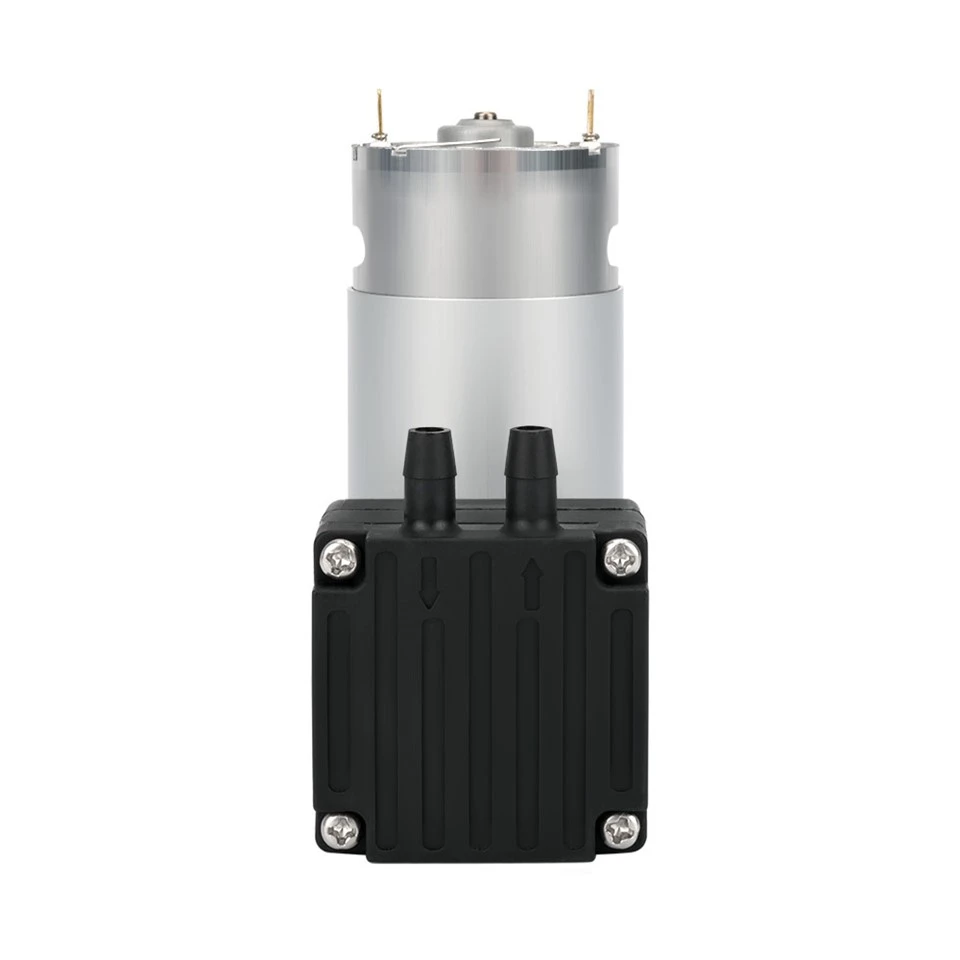
We offer the Diaphragm Micro Pump Low Pressure, which is specifically designed for low - pressure liquid pumping applications. It is compact, lightweight, and easy to install, making it ideal for small - scale operations such as in medical devices or analytical instruments.
2. Centrifugal Vacuum Pumps
Centrifugal vacuum pumps work on the principle of centrifugal force. A rotating impeller inside the pump accelerates the liquid, increasing its kinetic energy. As the liquid moves outward from the impeller, it creates a low - pressure area at the center, allowing more liquid to be drawn into the pump.
Centrifugal pumps are known for their high flow rates. They can move large volumes of liquid quickly, making them suitable for applications such as water supply systems, drainage, and industrial cooling. In a large - scale manufacturing plant, centrifugal vacuum pumps can be used to circulate coolant through machinery to prevent overheating.

However, centrifugal vacuum pumps are less effective at handling viscous liquids. The efficiency of the pump decreases as the viscosity of the liquid increases. Also, they require a continuous supply of liquid to operate properly. If the pump runs dry, it can cause damage to the impeller and other components.
3. Positive Displacement Vacuum Pumps
Positive displacement vacuum pumps are designed to trap a fixed amount of liquid and then displace it into the discharge line. There are several types of positive displacement pumps, including piston pumps, rotary vane pumps, and screw pumps.
Piston pumps use a piston that moves in a cylinder to create a pressure differential. They can generate high pressures and are suitable for pumping liquids against high - resistance systems. For instance, in oil and gas pipelines, piston pumps can be used to pump crude oil over long distances.
Rotary vane pumps have a rotor with vanes that slide in and out of slots. As the rotor rotates, the vanes trap and move the liquid. These pumps are often used in applications where a moderate flow rate and relatively high vacuum levels are required, such as in vacuum packaging machines.
Screw pumps consist of two or more intermeshing screws. The rotation of the screws moves the liquid along the axis of the pump. Screw pumps are excellent for handling viscous liquids, as they can provide a smooth and continuous flow. They are commonly used in the food and beverage industry to pump syrups and pastes.
4. Miniature Vacuum Pumps for Liquid Handling
In some applications, compact and lightweight vacuum pumps are required. Miniature vacuum pumps are designed to meet these needs.
The Mini Micro Electronic Vacuum Air Pump is an excellent option for small - scale liquid pumping. It is powered by electricity and can be integrated into small devices such as portable medical kits or handheld analyzers. These pumps are highly efficient and consume less power, making them perfect for battery - operated applications.
The Portable Mini Air Pump is also suitable for liquid pumping in certain situations. It is easy to carry around and can be used for quick liquid transfer tasks, such as in fieldwork or emergency situations.
Selection Considerations
When choosing a vacuum pump for liquid pumping, several factors should be considered:
Liquid Properties
The viscosity, corrosiveness, and temperature of the liquid play a significant role in pump selection. For example, if you are pumping a highly viscous liquid, a positive displacement pump like a screw pump would be a better choice than a centrifugal pump.
Flow Rate and Pressure Requirements
Determine the required flow rate and pressure of the liquid pumping application. High - flow applications may require centrifugal pumps, while high - pressure applications may need piston pumps.
Application Environment
Consider the environment in which the pump will operate. If the pump will be used in a hazardous area, it should be explosion - proof. In a cleanroom environment, the pump should not generate dust or contaminants.
As a vacuum pump supplier, we understand the importance of selecting the right pump for your specific application. We have a wide range of vacuum pumps available, from diaphragm micro pumps to large - scale centrifugal pumps. Our team of experts is ready to assist you in choosing the most suitable pump for your liquid - pumping needs.
If you are interested in purchasing a vacuum pump for liquid pumping or need more information about our products, please contact us for a detailed consultation. We look forward to working with you to find the perfect solution for your liquid - pumping requirements.
References
- ASME (American Society of Mechanical Engineers). "Pump Standards". ASME.
- Chemical Engineering Handbook. McGraw - Hill.
- Vacuum Technology Handbook. Leybold.