

Hey there! As a supplier of small capacity water pumps, I often get asked about the flow rate adjustment range of these nifty little devices. So, I thought I'd take a few minutes to break it down for you.
First off, let's talk about what a small capacity water pump is. These pumps are designed for applications where you don't need a huge amount of water moved. They're perfect for things like small aquariums, home gardening systems, or even some laboratory setups. Unlike large industrial pumps, small capacity water pumps are compact, energy - efficient, and usually more affordable.
Now, the flow rate adjustment range is a crucial factor when it comes to choosing the right small capacity water pump. The flow rate refers to the volume of water that the pump can move in a given amount of time, usually measured in liters per minute (L/min) or gallons per minute (GPM).
The flow rate adjustment range of small capacity water pumps can vary quite a bit depending on the type of pump. There are several types of small capacity water pumps out there, such as peristaltic pumps, diaphragm pumps, and electronic vacuum air pumps.
Let's start with peristaltic pumps. These pumps work by squeezing a flexible tube to move the fluid through it. They're great for applications where you need precise control over the flow rate. The flow rate adjustment range of a small capacity peristaltic pump can be quite wide. For example, some small peristaltic pumps can have a flow rate that ranges from as low as 0.01 L/min all the way up to 10 L/min. This wide range makes them suitable for a variety of tasks, from precise chemical dosing in a lab to gentle water circulation in a small aquarium. If you're interested in a metering dispenser dosing peristaltic pump, you can check out this Metering Dispenser Dosing Peristaltic Pump.
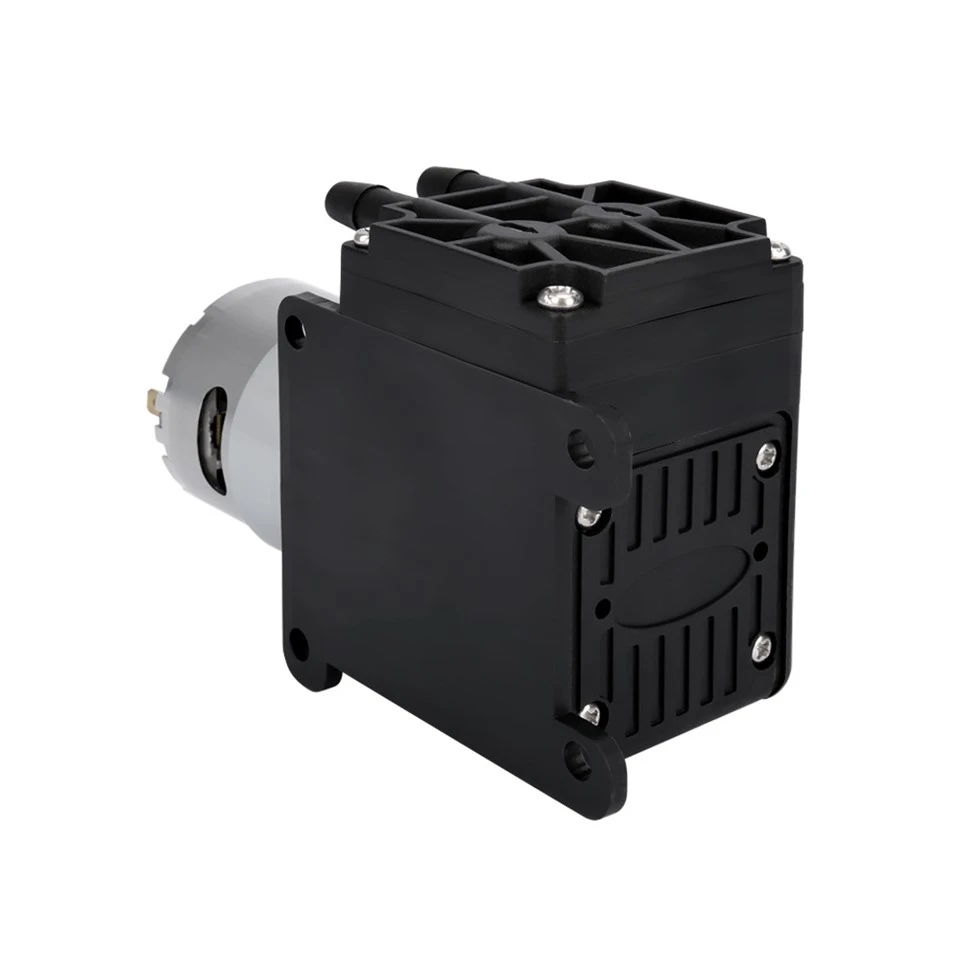
Next up are diaphragm pumps. Diaphragm micro pumps work by using a flexible diaphragm to create a vacuum and push the water through. They're known for their reliability and ability to handle different types of fluids. A small capacity diaphragm micro pump with low pressure typically has a flow rate adjustment range that might start from around 0.1 L/min and go up to 5 L/min. This range is great for applications where you need a consistent, moderate flow of water, like in small - scale water filtration systems or for filling small containers. You can learn more about Diaphragm Micro Pump Low Pressure.
Then there are mini micro electronic vacuum air pumps. These pumps are often used for creating a vacuum or moving small amounts of air or water. Their flow rate adjustment range is usually on the lower side. It can start from as little as 0.001 L/min and go up to 1 L/min. They're perfect for applications where you need a very small and precise flow, such as in some medical devices or in small - scale scientific experiments. If you're in the market for a mini micro electronic vacuum air pump, check out this Mini Micro Electronic Vacuum Air Pump.
Several factors can affect the flow rate adjustment range of a small capacity water pump. One of the main factors is the pump's design and construction. Pumps with more advanced mechanisms and better - quality components tend to have a wider and more accurate flow rate adjustment range. The power source also plays a role. Electric pumps can usually offer more precise control over the flow rate compared to manual or mechanical pumps.
Another important factor is the viscosity of the fluid being pumped. Thicker fluids will require more power to move, and this can limit the pump's flow rate. So, if you're planning to pump a thick liquid like oil or a highly concentrated chemical solution, you'll need to choose a pump that can handle that viscosity within your desired flow rate range.
The pressure requirements of your application are also crucial. If you need to pump water to a certain height or against a high - pressure system, the pump's flow rate might be affected. In general, as the pressure increases, the flow rate of the pump will decrease. So, you need to make sure that the pump you choose can maintain the required flow rate at the pressure your application demands.
When it comes to adjusting the flow rate of a small capacity water pump, there are a few methods. Some pumps come with a built - in flow control valve. You can simply turn the valve to increase or decrease the flow of water. Other pumps might have a digital control panel where you can set the exact flow rate you need. In some cases, you can also adjust the speed of the pump motor to change the flow rate.
Now, why is it so important to have the right flow rate adjustment range for your small capacity water pump? Well, if the flow rate is too low, your application might not work properly. For example, in an aquarium, if the water circulation is too slow, it can lead to poor water quality and unhealthy fish. On the other hand, if the flow rate is too high, it can cause damage to your system. In a small - scale water filtration system, a high flow rate might overwhelm the filters and reduce their efficiency.
As a supplier, I understand that choosing the right small capacity water pump with the appropriate flow rate adjustment range can be a bit confusing. That's why I'm here to help. Whether you're a hobbyist looking for a pump for your home garden or a professional in a scientific or industrial setting, I can assist you in finding the perfect pump for your needs.
If you're interested in learning more about our small capacity water pumps or have any questions about the flow rate adjustment range, don't hesitate to reach out. We can have a detailed discussion about your application requirements, and I'll help you select the pump that will work best for you.
In conclusion, the flow rate adjustment range of a small capacity water pump is an important factor to consider when making a purchase. Different types of pumps offer different ranges, and several factors can affect this range. By understanding these factors and choosing the right pump, you can ensure that your application runs smoothly and efficiently. So, if you're in the market for a small capacity water pump, give us a shout, and let's get your project up and running!

References
- Pump Handbook by Igor J. Karassik et al.
- Fluid Mechanics and Machinery by S. K. Som and G. Biswas.